Your Wallet Is Talking: The 2026 Identity Fight That Will Shape Your Online Reputation
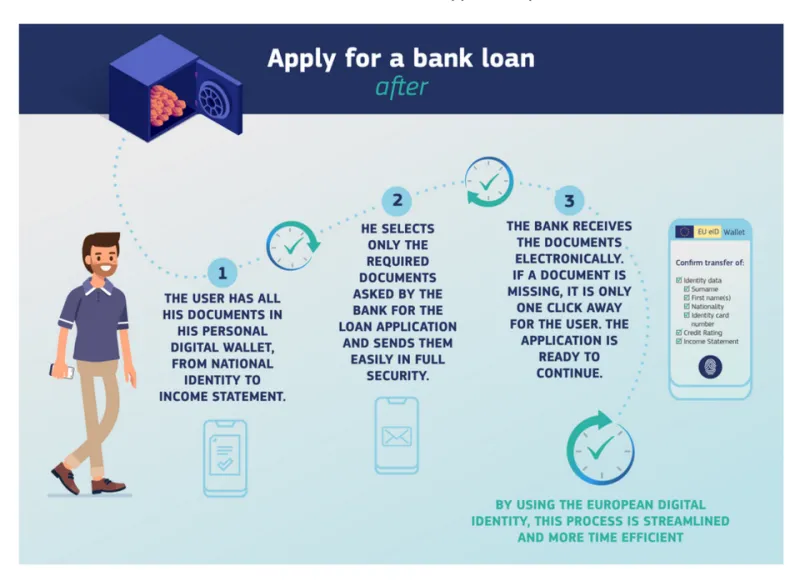
Photo: European Commission, Public domain, via Wikimedia Commons
Your wallet used to be where your money lived. In 2026, it is increasingly where your reputation lives, too. A wallet can prove you attended an event, contributed to a community, held a credential, or passed a verification check. That sounds convenient until you realize the same wallet can become a credit score for social life.
This is the identity fight every US platform user should understand. It is not really about tokens. It is about who gets to define, verify, and monetize your digital self. And the outcome will matter to people who have never bought a single NFT.
From login button to reputation layer
Wallet-based login was once a niche convenience for crypto natives. In 2026, it is turning into a general-purpose identity hook. A wallet can carry proof of membership, a history of contributions, a verified credential, or a portable list of trusted connections. Platforms like that because it reduces friction and gives them a ready-made signal of who is real, who is active, and who is worth prioritizing.
Users like it for a different reason: portability. If your reputation lives in a wallet instead of a platform account, you can theoretically take it with you. That is the promise. The fight is over whether the promise survives contact with business models.
The stakes look a lot like credit
Once reputation becomes portable, it becomes useful for decisions that go far beyond a comment section. Platforms may use wallet history to decide who gets early access, higher limits, or a trusted badge. Marketplaces may use it to rank sellers. Communities may use it to gate access. Employers may use it to screen candidates. None of that is inherently sinister, but all of it starts to resemble a consumer report.
That is where US regulators are likely to get interested. The questions are familiar: Is this a credit-like decision? Is the data accurate? Can a person dispute it? What happens when an AI-generated persona farms a good score? The answers are not settled, and the platforms building these systems are moving faster than the rules.
The AI persona problem
Portable reputation has a bot problem. If a wallet can accumulate trust, someone will build an AI persona to accumulate it faster. Synthetic identities can post, trade, attend events, and build histories. A system that cannot tell the difference between a person and a persistent agent is not a reputation system. It is a role-playing game with financial consequences.
That does not mean AI personas should be banned. It means they need to be labeled, bounded, and separated from human-only credentials. The more valuable reputation becomes, the more valuable the fake version becomes. Verification has to be part of the design, not a patch added after the first scandal.
The regulatory collision course
US regulators are circling from several directions. Privacy law asks what data is collected and why. Consumer protection asks whether people are being treated fairly. Financial regulation asks whether a reputation score is quietly acting like a credit score. Platform policy asks who is responsible when a portable identity is wrong.
The platforms want interoperable identity because it makes their ecosystems stickier. Regulators want accountability because portable systems can spread mistakes faster than closed ones. Users want convenience because logging in with a wallet is easier than remembering another password. Those three goals are not impossible to reconcile, but they will collide in public.
A practical framework for judging user-owned identity
Not every wallet-based identity system is genuinely user-owned. Here is a simple test anyone can apply.
1. The exit test
Can you take your reputation with you? If leaving a platform means losing your history, your credentials, and your standing, the system is not portable. It is a loyalty program with extra steps.
2. The visibility test
Who can read your identity data? If every platform, advertiser, and data broker can inspect your wallet history by default, you do not own it. You are renting access to your own reputation.
3. The correction test
Can you fix a mistake? Portable systems need a dispute process. If a false credential or a bad-faith report can follow you forever, the system is not decentralized. It is just permanent.
4. The surveillance test
Can you prove something without revealing everything? Good identity systems let you verify a fact without handing over your whole life. A badge that says you are a verified human should not also expose your transaction history.
5. The upside test
Who captures the value? If your reputation makes a platform richer while you get nothing but access, the economics are upside down. User-owned identity should give users some control over the value they create.
What a good system feels like
The best identity system in 2026 will feel boring. It will be easy to use, hard to fake, simple to correct, and possible to leave. It will not promise to replace government ID or turn every social interaction into a score. It will do a few useful things well and stay out of the way.
The wallet is becoming a reputation layer whether users are ready or not. The question is whether that layer is built for people or for platforms. The answer will not come from a whitepaper. It will come from the rules, defaults, and exit rights that show up in the product.